Online Shopping Scams Philippines: Full 2026 Guide
- Most scams reuse the same few tricks: fake COD parcels, paid-then-blocked sellers, phishing texts, too-good prices and surprise fees.
- Pay inside the app. Direct GCash or bank transfers to strangers have no buyer protection.
- Search the seller's name plus "scam" and read the low-star reviews before buying.
- If you've been scammed, move fast: stop paying, call your bank or e-wallet, and document everything.
- Report to the CICC at 1326. For seller disputes, the DTI hotline is 1-384.
- Never lend your GCash, Maya or bank account. Under AFASA it's a crime.
- The five habits that prevent most scams
- Why it feels like there are more scams lately
- The scams you're most likely to see
- How to check a seller in two minutes
- Tricked vs. hacked: why it matters
- Already scammed? Stop, call, confirm
- Don't lend your account to anyone
- Your rights as an online shopper
- Where to report
- How a DTI complaint goes
- A quick check before you pay anyone
- Which payment method protects you most
- Safe habit vs. warning sign
- More guides on shopping safely
A parcel you don't remember ordering. A text saying your Shopee package is "on hold." A seller on Facebook who suddenly stops replying after you've paid. If any of that sounds familiar, you're not being paranoid. Online shopping scams in the Philippines have gotten better at looking real, but most of them still run on the same handful of tricks. Learn the tricks and they lose most of their power.

This guide walks through the scams Filipino shoppers run into most, how to check a seller in a couple of minutes, what to do in the first hours if you've already been hit, and where to report. It's general consumer information, not legal advice.
The five habits that prevent most scams
If you only remember one part of this page, make it this:
- Pay inside the app. Shopee, Lazada and TikTok Shop hold your payment until you confirm the order arrived. A direct GCash or bank transfer to a stranger has no such protection.
- Don't send money to a seller you can't verify, no matter how good the price is.
- Before paying a rider for a COD parcel, check that someone in the house actually ordered it.
- Never tap "verify your account" links that arrive by text or email.
- Search the seller's name plus the word "scam" before you buy.
And if it's already happened: stop sending money, call your bank or e-wallet, document everything, and report to the CICC hotline at 1326.
Why it feels like there are more scams lately
Part of it is reach. Leaked personal data, cheap fake storefronts and boosted social media ads let one scammer target thousands of people for very little money. Most victims lose a modest amount each time, which is exactly what makes the scheme work: it hurts, but many people decide it isn't worth reporting.
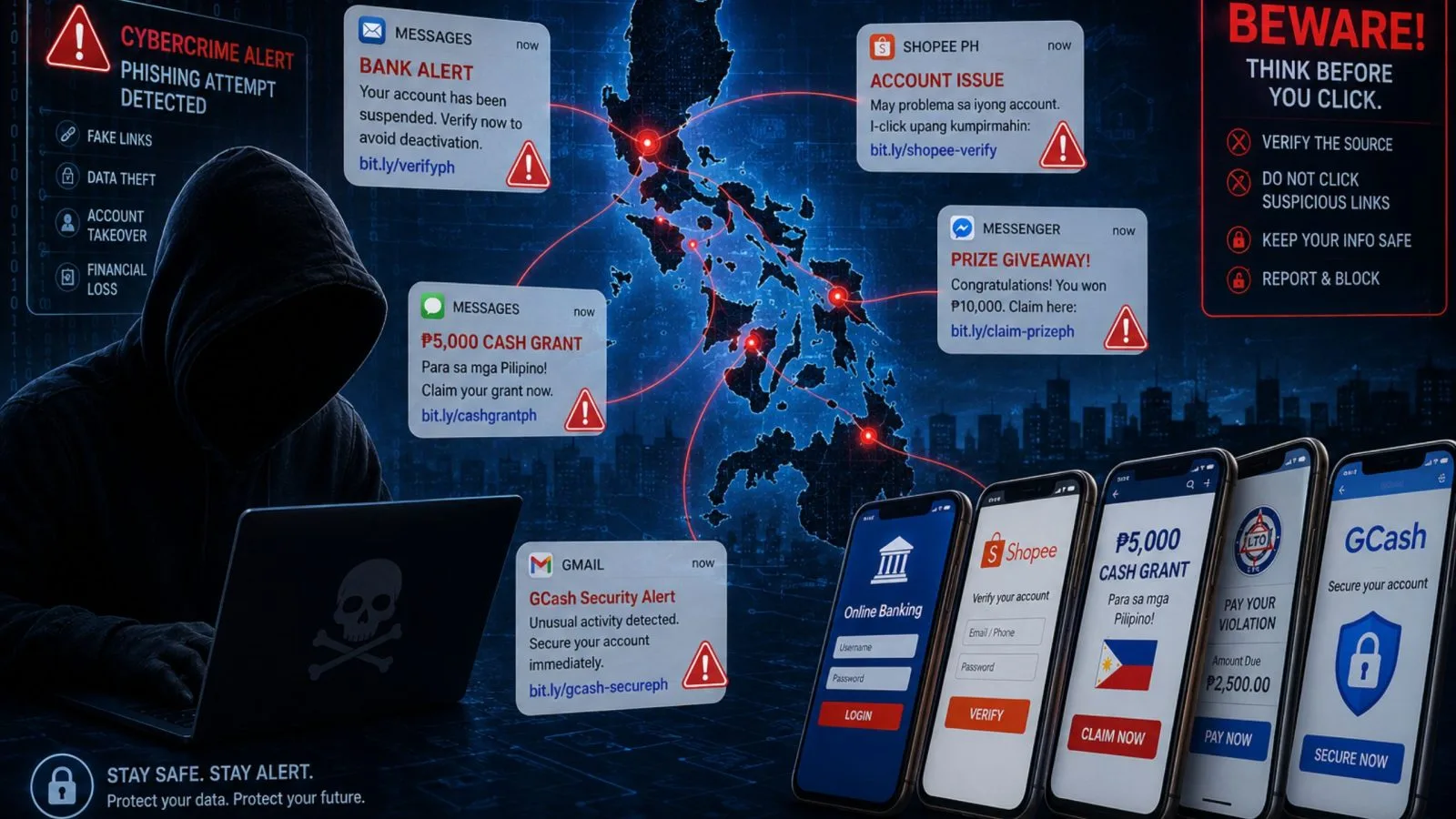
The rules have also pushed scammers around. The SIM Registration Act (RA 11934) made throwaway-number text blasts harder, so a lot of the activity shifted to phishing links, fake delivery notices and social media sellers. Data leaks feed the rest. When a shop or app database gets breached, names, addresses and phone numbers end up for sale, which is how a fake COD parcel can arrive with your correct name on it. If you think your personal data was misused, you can file a complaint with the National Privacy Commission.
The scams you're most likely to see
1. The fake COD parcel
A rider shows up with a parcel addressed to you or someone at home and asks for payment, usually a few hundred pesos, sometimes more than a thousand. A family member assumes a relative ordered it and pays. Inside is a keychain, a single sock, or a "phone" that's really a block wrapped in plastic. No one placed the order. The address came from a leak or an old transaction.

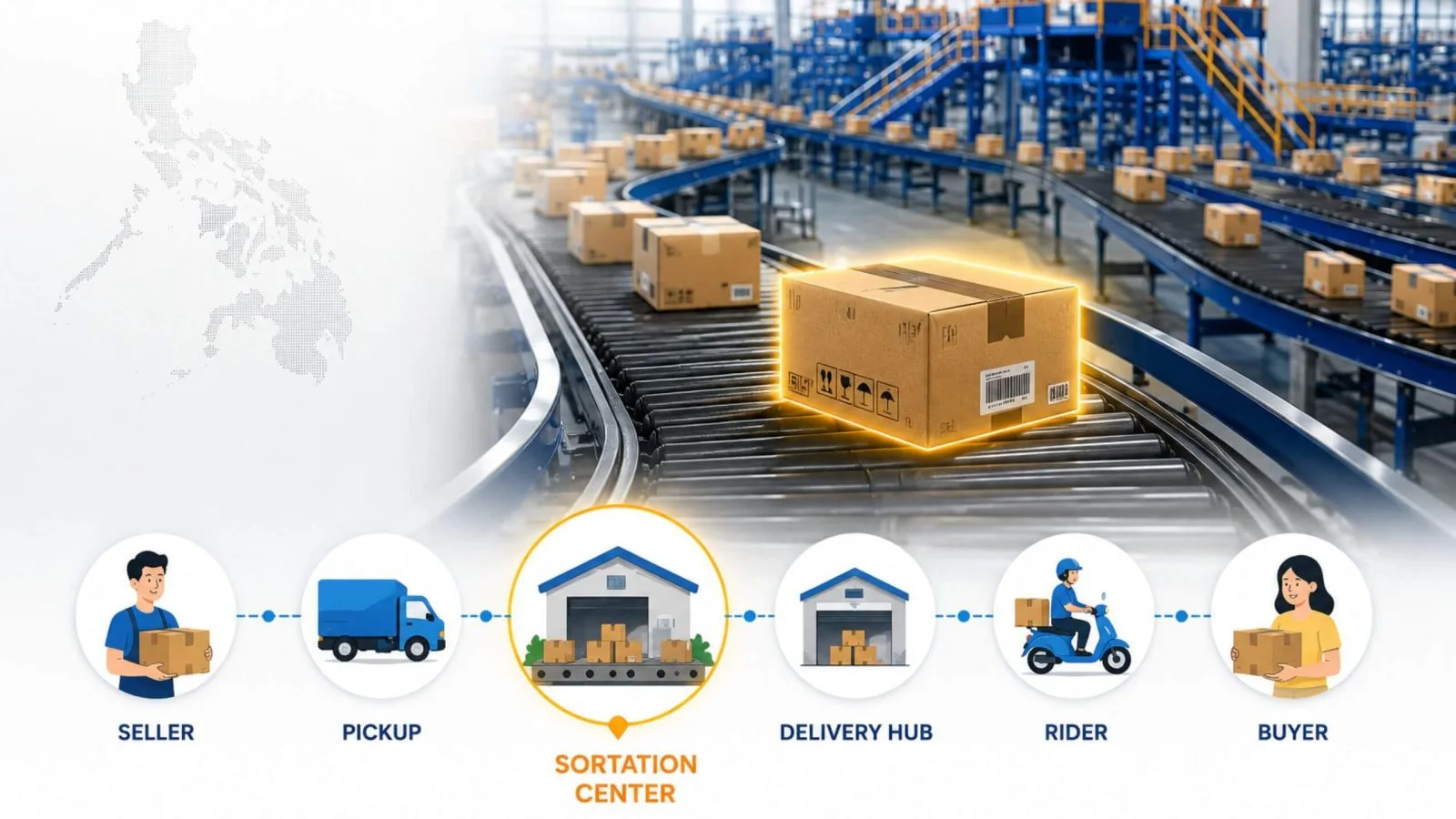
The fix is boring but it works: nobody at home pays for a COD parcel until they've confirmed the order in the app. Make sure parents, helpers and kids know this, since they're often the ones answering the door. You're not obligated to accept something you didn't buy. We cover the full routine in our guide to fake COD parcels. If it's a real order that's just slow, read what "parcel in sortation center" means before you panic.
2. Paid, then blocked
This one lives in Facebook buy-and-sell groups, Instagram and sponsored ads. Branded ukay, gadgets, sneakers or concert tickets at a great price, but the seller wants full payment by GCash or bank transfer before shipping. You pay. The replies slow down. Then you're blocked and the page is gone.
The only real defense is not paying the full amount upfront to a social media seller you can't verify. Use a marketplace checkout, or COD where you're allowed to inspect the item first.
3. Phishing and smishing
Phishing is a fake website, email or page. Smishing is the same thing by SMS. "Your Shopee package is on hold, update your address here." "Your bank account has been locked, verify now." The link leads to a near-perfect copy of a real login page, and the moment you type your password, the account is theirs.
Two rules cover almost every case. Banks, Shopee, Lazada, GCash and Maya won't ask for your password, OTP or PIN through a link, a text or a call. And if a message is unexpected, don't use its link at all. Open the official app yourself.
4. The price that's too good
An iPhone at a fraction of its price. Branded shoes at 90% off. A "closing sale" on a website you've never heard of. These are usually cloned stores or fake ads built to take your payment and disappear. With deals, the thing to judge is the seller, not the price tag.
5. The surprise fee
You've already paid. Then a message asks for "shipping insurance," a "customs fee," a "refundable deposit" or a "release fee" before the item can move. Pay it and there's another one. Legitimate sellers and couriers don't invent new charges after checkout, so treat any surprise fee as a scam until you've confirmed otherwise through the platform.
How to check a seller in two minutes
- On Shopee and Lazada, look for the Mall or official store label, the shop's join date, follower count and chat response rate. A brand-new store selling a single expensive item is a red flag.
- Read the 1-star and 3-star reviews before the 5-star ones. That's where the real complaints are. Rows of identical "Nice! Fast delivery! Good seller!" reviews posted on the same day, with no photos, are a warning sign.
- For websites, remember that the padlock only means the connection is encrypted. It says nothing about whether the shop is honest. Look for a physical address, a working contact and a returns policy.
- Be wary of new domains. A "trusted electronics store" whose website went up three weeks ago deserves suspicion.
For the full version of this check, including how to read reviews and what to look for on Facebook, see how to check if an online seller is legit.
The single most useful habit is searching the seller or page name with "scam," "complaint" or "hindi dumating." If other buyers got burned, they've usually posted about it.
Tricked vs. hacked: why it matters
How you lost the money affects your chances of getting it back.
If you were tricked into sending it yourself, by pressing send or entering the OTP because you believed a story, recovery is harder, especially once the scammer has withdrawn the funds. Report anyway. Sometimes the money hasn't moved yet.
If someone got into your account without your permission, that's unauthorized access, and the bank or e-wallet's responsibility is clearer. The case for freezing or reversing the transaction is stronger.
The Anti-Financial Account Scamming Act (AFASA, RA 12010) gives banks and e-wallets more room to act on suspicious accounts and disputed funds. Either way, speed is everything.
Already scammed? Stop, call, confirm
Don't freeze up and don't blame yourself. These people do this full time. Your best chance of getting money back is usually in the first 24 to 48 hours.
| Stop | Call | Confirm (document everything) |
|---|---|---|
| Stop sending money. A "release fee" or "verification deposit" is part of the scam. | Call your bank or e-wallet right away. GCash, Maya and the banks have fraud teams that can flag or hold transfers if you reach them early. | Screenshot the seller's profile, the post or ad, the listing and the whole conversation. |
| Stop clicking links from the scammer or the fake "courier." | Report the receiving account or number as fraudulent. This is the most time-sensitive step. | Save the exact link, plus reference numbers, receipts, and the date and time of each payment. |
| Don't delete the chats or the scammer's profile. That's your evidence. | Then report to the authorities listed below. | Write a short timeline of what happened while it's fresh. |
Don't lend your account to anyone
"Just let some money pass through your GCash and keep 10%." Offers like this target students, jobseekers and OFW families, and they're recruiting money mules. Under AFASA, letting your account be used to move scam money is a crime, even if you were told you were "just helping." Penalties include jail time and fines, and the account can be closed. No real job needs nothing from you except access to your e-wallet.
Your rights as an online shopper
Online sellers are held to the same basic standards as physical stores under the Consumer Act (RA 7394) and the E-Commerce Act (RA 8792). You're entitled to products that are safe and as described, so a wrong, fake or defective item is grounds for a refund, replacement or repair. False advertising and fake "limited stock" claims are consumer issues the DTI handles. And the Data Privacy Act (RA 10173) covers misuse of your personal information.
It helps to know who handles what. The DTI takes trade and consumer disputes. The BSP oversees banks and e-wallets. The PNP and NBI handle criminal estafa.
Where to report
- CICC hotline 1326. The Cybercrime Investigation and Coordinating Center's round-the-clock line. It can coordinate with banks and e-wallets on suspicious transactions. You can also report through the CICC website.
- PNP Anti-Cybercrime Group or NBI Cybercrime Division. For a formal criminal complaint like cyber-estafa. You'll need an affidavit-complaint and your evidence.
- DTI Consumer Care, hotline 1-384. For seller disputes: defective items, non-delivery, misleading listings, unhonored warranties.
- The platform itself. Shopee, Lazada, Facebook and Instagram all have in-app reporting and dispute tools. Payments made through a marketplace checkout are often refunded if you raise the dispute early.
- National Privacy Commission. If you think a data leak is how the scammer found you.
How a DTI complaint goes
You can file online through DTI Consumer Care (consumercare.dti.gov.ph) or call 1-384. Filing is free, and you don't need a lawyer.
Start by putting together your evidence: screenshots of the listing and chat, proof of payment, order details, and the seller's name or store. Submit the complaint online or ask the hotline for help. The DTI checks whether the case is within its jurisdiction, then usually schedules mediation between you and the seller, where an officer helps you land on a refund, replacement or settlement. If mediation fails, the case can go to adjudication, where a DTI officer reviews the evidence and decides. One limit to know: a purely foreign seller with no presence in the Philippines is often outside DTI's reach, so in that case go through the platform's dispute process or to the PNP or NBI.
A quick check before you pay anyone
- Does the seller have a real history and, ideally, an official or Mall badge?
- Have you read the low-star reviews, especially the ones with photos?
- Is there a real address, contact and returns policy?
- Did you search "[seller name] scam"?
- Are you paying inside the platform?
- For COD, did someone at home actually order this?
- Has a new fee shown up after checkout?
If any answer makes you hesitate, stop and check again before paying.
Which payment method protects you most
How you pay decides how much protection you have if something goes wrong. Paying inside the app keeps the platform involved, a credit card adds a bank dispute on top, and a direct transfer to a seller leaves you with nothing. We compare every option in COD, e-wallet or credit card: which is safest, and the two big e-wallets in GCash vs Maya.
Safe habit vs. warning sign
| Safe habit | Warning sign |
|---|---|
| Paying through the marketplace checkout | Being asked to pay in full by direct GCash or bank transfer to a personal account |
| Confirming the order before accepting COD | A COD parcel nobody at home ordered |
| Opening the official app to check an order | A "verify your account" link in a text or email |
| Reading the 1-star to 3-star reviews | Many identical 5-star reviews posted on the same day |
| A seller with history, badges and working contact details | A new page with no address that goes quiet when you ask questions |
| A final price you agreed to at checkout | New "fees" after you've paid |
| Searching "[seller] scam" first | Pressure to buy now because of "limited stock" |
More guides on shopping safely
- How to check if an online seller is legit
- How to return an item and get a refund
- What to do about a fake COD parcel
- COD, e-wallet or credit card: which is safest
- GCash vs Maya for online shopping
- ShopeePay vs Lazada Wallet
- What "parcel in sortation center" means
- How to spot fake products online
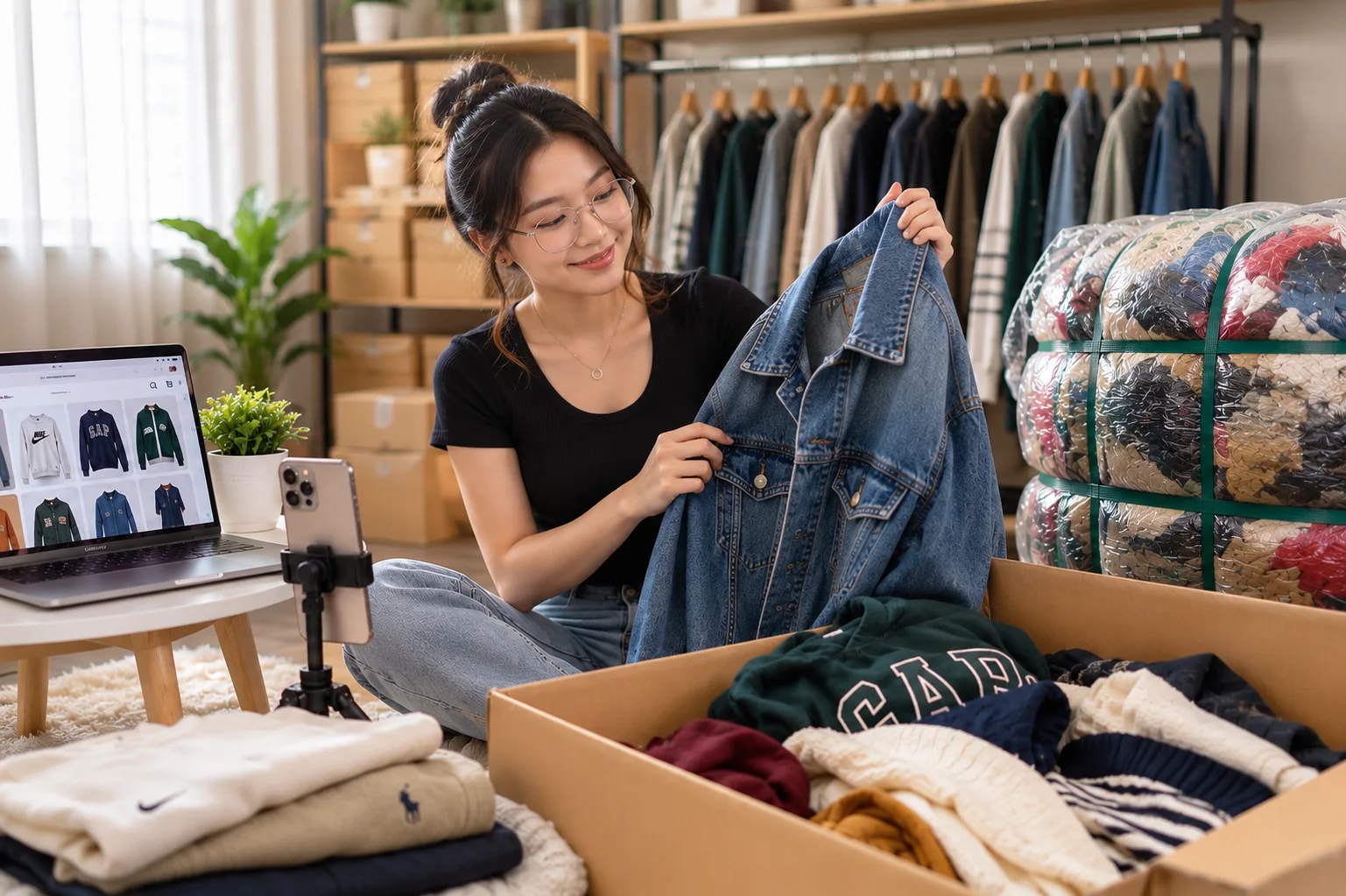
- Buying ukay-ukay bales online without getting scammed
Scammers count on two things: that you'll act before you think, and that you'll be too embarrassed to report. Do the opposite of both. Bookmark this page, and send it to the relatives who get the most suspicious texts. A single forwarded link can save someone a month's salary.
General information only, not legal advice. For your specific case, contact the agencies above or a qualified professional. References: CICC, DTI, BSP, RA 12010 (AFASA), RA 11934 (SIM Registration Act), RA 7394, RA 8792, RA 10173.

Comments 0
Wala pang komento. Be the first to comment!
Leave a Comment