How to Choose a Power Bank in the Philippines: Brownouts, Commutes and Flights
- You get roughly two-thirds of the printed mAh as usable charge, sometimes less.
- 10,000mAh suits most commuters; 20,000mAh is the brownout size but heavy and slow to refill.
- Check output and input in watts, and look for USB-C Power Delivery.
- Buy from official stores. Fake power banks are a real safety risk.
- Airlines go by watt-hours: carry-on only, and up to 100Wh is generally allowed.
In a lot of Philippine homes, a power bank isn't a travel gadget. It's what keeps phones alive when the power goes out at 8 PM, what gets you through a three-hour commute, and what lets you keep the Wi-Fi router running for a bit during an outage. Which is exactly why buying a bad one is so frustrating.
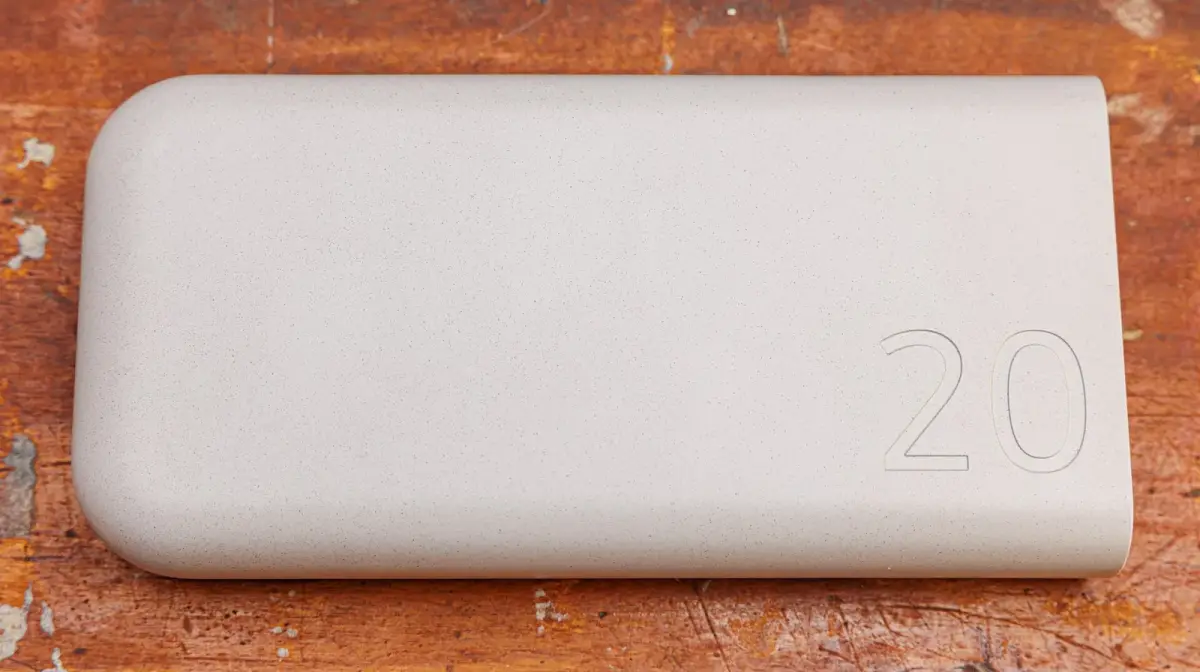
Photo: SAMSUNG BATTERY PACK (POWER BANK) EB-P4520 by Dinkun Chen, CC BY-SA 4.0, via Wikimedia Commons. Resized.
This guide explains what the numbers on a power bank actually mean, how much capacity you really need, what to check on the listing, and what airlines allow if you fly. It's general buying advice, not a product test.
What "mAh" really tells you
The big number on the box, 10,000mAh or 20,000mAh, is the capacity of the battery cells inside, measured at the cells' own voltage (usually about 3.6 to 3.7V). Your phone charges at 5V or more, and some energy is lost as heat while converting. So you never get the full printed amount into your phone.
A common rule of thumb is that you'll get roughly two-thirds of the rated capacity as usable charge, sometimes a bit less, depending on the power bank's quality and the charging speed. If a power bank delivers far less than that, it's either badly made or its capacity is exaggerated, which is common with very cheap no-name units.
For a rough idea of how many full charges you'll get, compare the usable amount with your phone's battery size, which you can find in its specs. A big phone battery fills up fewer times than a small one.
How much capacity do you need?
About 5,000mAh is a pocket-size top-up. Enough to rescue a dying phone once, light enough to forget it's in your bag.
About 10,000mAh is the sweet spot for most commuters. It's a full charge or so for many phones, and still reasonably light.
About 20,000mAh is the brownout size. Several phone charges, or a phone plus earbuds and a small fan. It's heavy, though, and takes a long time to recharge, so it lives better at home or in a bag than in a pocket.
Bigger "power stations" with AC outlets are a different category and a different budget. If your goal is to run a router or a fan for hours, look at those specifically, and check the output in watts.
Charging speed and ports
Capacity tells you how much, output tells you how fast. Look for the output in watts (W) or in volts and amps on the listing.
- USB-C with Power Delivery (PD) charges most recent phones quickly, and many can charge tablets or small laptops if the wattage is high enough.
- Quick Charge and other fast-charging standards help with phones that support them.
- The input speed matters too. A big power bank with slow input can take most of a day to refill. If you need it ready before the next outage, look for fast USB-C input.
- Number of ports matters if you charge more than one thing at a time. Note that output is often shared, so each device charges slower when several are plugged in.
What to check on the listing
Buy from a known brand's official store when you can. Power banks are one of the most commonly faked products, and fakes are the ones most likely to overheat, swell or deliver a fraction of their claimed capacity. Our guide on spotting fake products online covers the red flags.
Be wary of huge numbers at tiny prices. A "50,000mAh" power bank for a few hundred pesos is almost certainly exaggerated.
Read reviews that mention real use: how many times it charged a specific phone, how hot it got, how long it took to recharge. Those tell you more than star ratings.
Check the weight and size if you'll carry it daily. A 20,000mAh unit can feel like a brick by the end of a commute.
And look at the warranty and the return policy, especially for higher-priced units.
Flying with a power bank
Airlines generally follow international rules for lithium batteries, which are based on watt-hours (Wh), not mAh. To work out watt-hours, multiply the mAh by the voltage (usually 3.6 or 3.7V) and divide by 1,000. A 10,000mAh power bank is about 37Wh, and a 20,000mAh one is about 74Wh.
The common rules are that power banks must go in your carry-on, never in checked luggage; units up to 100Wh are generally allowed; units between 100Wh and 160Wh usually need the airline's approval; and anything above 160Wh generally isn't allowed. Many airlines also limit how many you can carry and whether you can use or charge them during the flight. Rules can be stricter on some airlines, so check your airline's own page before you fly. A clearly printed capacity on the power bank helps at security, since unlabeled units can be refused.
Using it safely
- Don't leave it charging under a pillow, on the bed or in direct sun. Heat is the enemy.
- Stop using it if it swells, smells strange or gets very hot. Don't puncture it, and dispose of it properly.
- Use a decent cable. Cheap, frayed cables are a common cause of problems.
- Don't let it sit completely empty for months. Top it up every so often if it's for emergencies.
- Keep it away from water, which matters during typhoon season and floods.
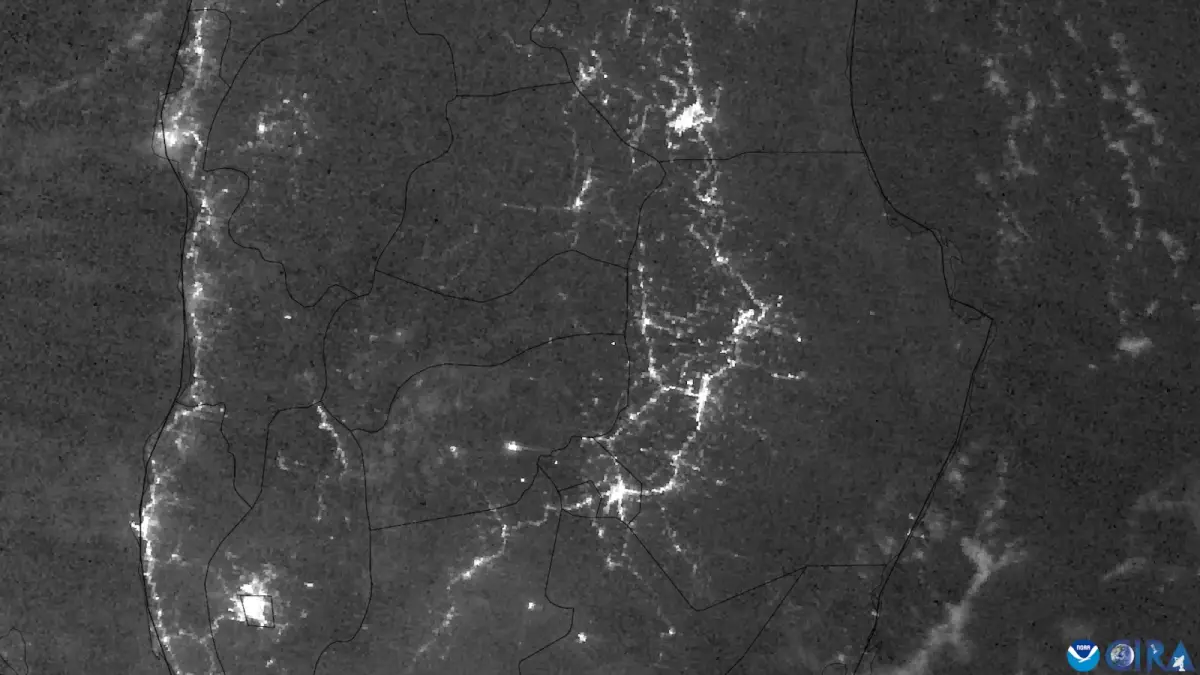
Photo: Power Outages in the Philippines After Fung-wong (CIRA 2025-11-12 - 202505201704 n21-snpp-n20 viirs dnb fungwongpower nolabels0) by JPSS imagery: CSU/CIRA & NOAA/NESDIS, Public domain, via Wikimedia Commons
For brownouts specifically
If you're buying mainly for power interruptions, think about what you actually need to keep running. Phones and earbuds are easy. A rechargeable fan or LED light usually charges over USB too. A Wi-Fi router may need a specific adapter or a power station. Keep the power bank charged ahead of typhoon warnings, and have a second small one for each person if your household has several phones.
Brownouts also mean heat. A small rechargeable fan is one of the cheap finds in our kitchen and home gadgets and budget buying guide.
We list a few popular budget options, including a 20,000mAh model, in our budget buying guide. To pay less, time your purchase with a double-day sale using our sale calendar, and pay inside the app so you're covered if the unit turns out to be faulty.



Comments 0
Wala pang komento. Be the first to comment!
Leave a Comment